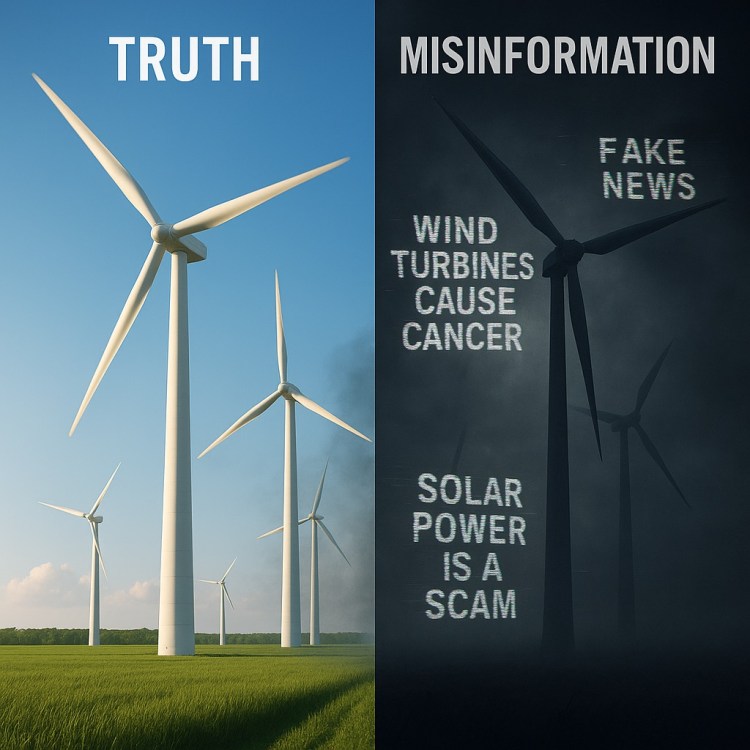
In a world where information moves faster than ever, misinformation has become a serious threat to global challenges—especially the clean energy transition. From false claims about wind turbines causing illness to misleading narratives on the reliability of solar power, disinformation undermines public trust and slows much-needed progress.
Why Misinformation Matters in the Energy Sector
The energy transition depends not only on technology and policy—but also on public perception. When fake news spreads across social media and news outlets, it can:
- Create doubt about renewable technologies
- Fuel resistance to new infrastructure projects
- Politicize environmental issues unnecessarily
- Delay crucial climate action
Real-World Examples
- Wind Turbine Syndrome: A debunked health scare often circulated to oppose wind farms.
- Baseload Myths: The false narrative that renewables can’t provide stable electricity, ignoring the advances in grid integration and storage.
How to Identify and Combat Energy Disinformation
1. Check the Source
Only trust verified scientific institutions, energy experts, or peer-reviewed articles. Be wary of content lacking citations or from political blogs without credentials.
2. Use Fact-Checking Tools
Websites like Snopes, Climate Feedback, or Clean Energy Wire offer detailed debunkings of energy-related misinformation.
3. Promote Transparent Communication
As professionals, educators, and consumers, we must support organizations that are transparent about their methods, goals, and data sources.
Why This Matters for a Sustainable Future
If we want to reach net-zero emissions, the battle against disinformation is just as important as building solar panels or wind farms. Informed citizens make informed decisions—and that’s the only way we’ll see lasting change.
“A lie can travel halfway around the world while the truth is still putting on its shoes.” – Mark Twain (or maybe not—yes, even quotes can be misattributed!)
Want to Learn More?
Explore our upcoming posts on:
 To Energy and Beyond
Leave a comment